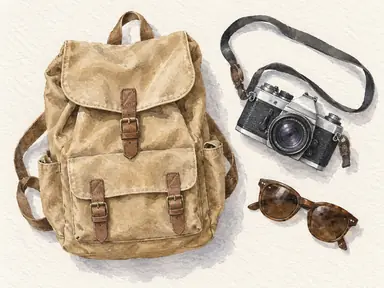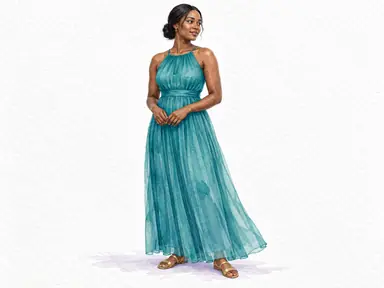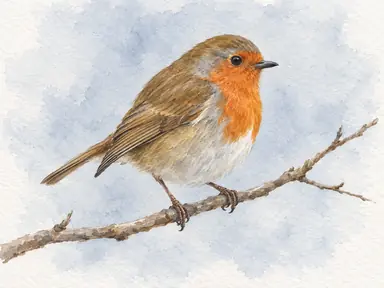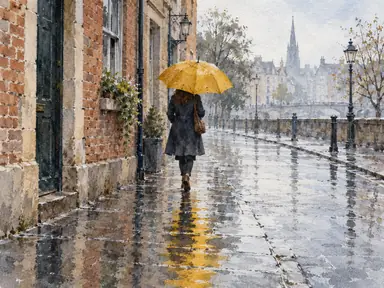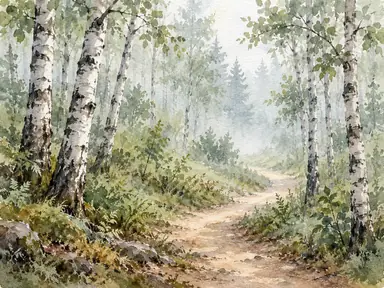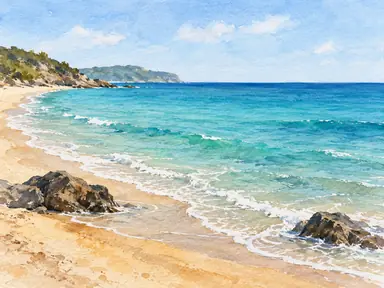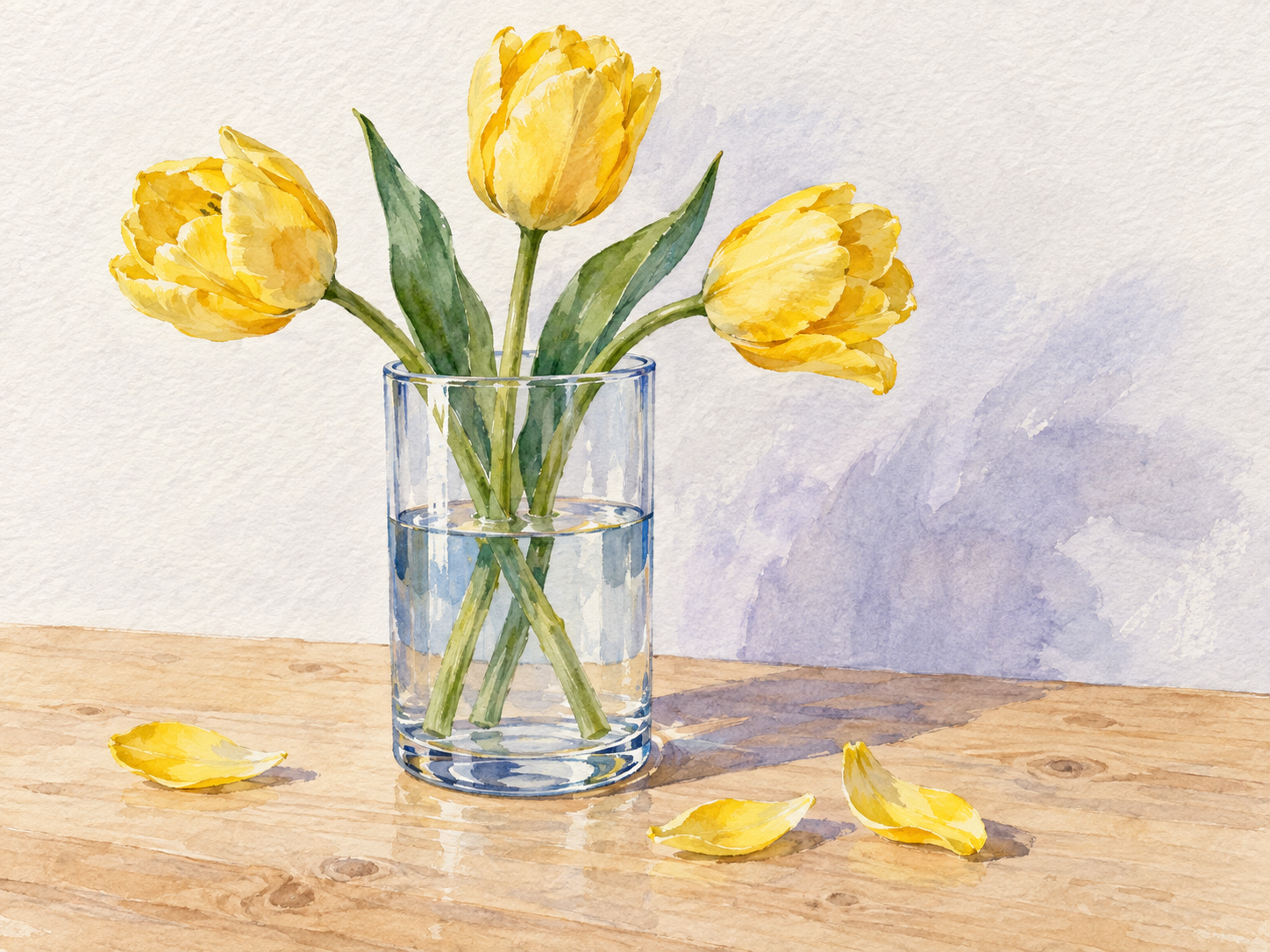
Example result illustrating this prompt's visual direction. Actual results may vary by model, reference image and settings.
 Requires Photo
  Creative Prompts
  Photo to Watercolor Illustration Prompts
 Transparent Glass Vase Watercolor Still Life
Turn a vase still life into watercolor with convincing glass transparency and reflected color.
Prompt
Transform the uploaded reference photo into a hand-painted watercolor illustration. Use the supplied photograph as the authoritative source for subject structure and visible details. Work from a still-life photo of flowers or stems in a clear glass vase. Keep the vase shape, rim ellipse, water level, arrangement, table perspective and light direction. Preserve transparency rather than turning the vessel opaque. Suggest glass through interrupted contour strokes, faint reflected colors and carefully reserved white highlights. Paint the visible water line and refracted stems only where present. Use loose floral washes above the vase and a soft connected cast shadow beneath it. Maintain the original tabletop layout and simplify the background to a pale wash. Ensure the vase is fully inside the frame. The result must read as a new watercolor painting on subtly textured cold-press paper, with translucent pigment, purposeful brushwork and varied edge softness, not a photograph with a texture overlay. Avoid oil-paint impasto, glossy 3D rendering, heavy cartoon outlines, decorative text, signatures and watermarks. Return a single finished illustration, not a before-and-after comparison, collage or framed mockup.
Recommended:
ChatGPT


Upload your photo to the AI tool first, then use this prompt.
The prompt asks the model to preserve identity and key visual features.
How to use it
- Upload a clear reference photo showing still-life photo of flowers or stems in a clear glass vase.
- Paste the full prompt and request one finished watercolor illustration.
- Compare the result with your reference for subject accuracy and apply a relevant failure fix if needed.
Common failure fixes
- If glass looks opaque, remove solid fill and describe it with broken contours and reflections.
- If stems ignore refraction, align their visible segments to the reference at the water line.
- If the vase floats, restore the contact shadow directly beneath its base.