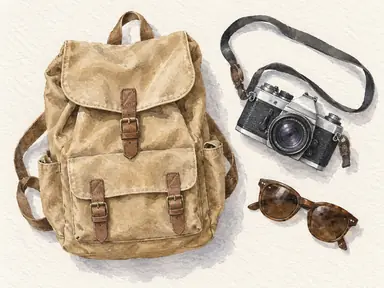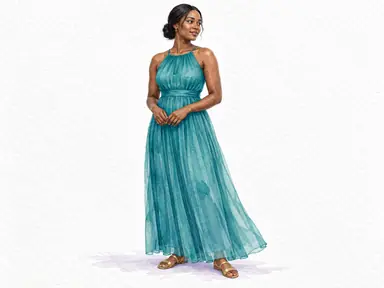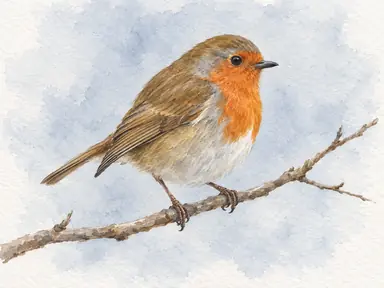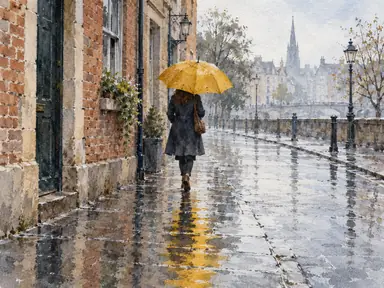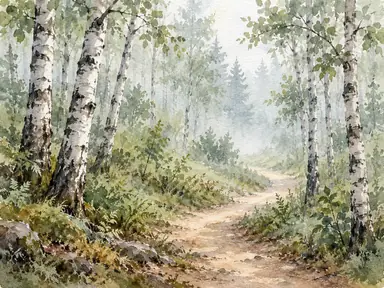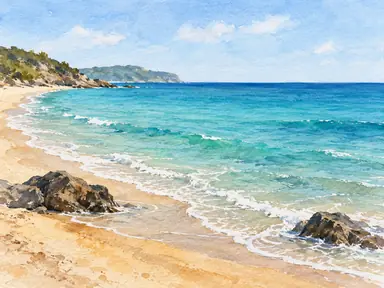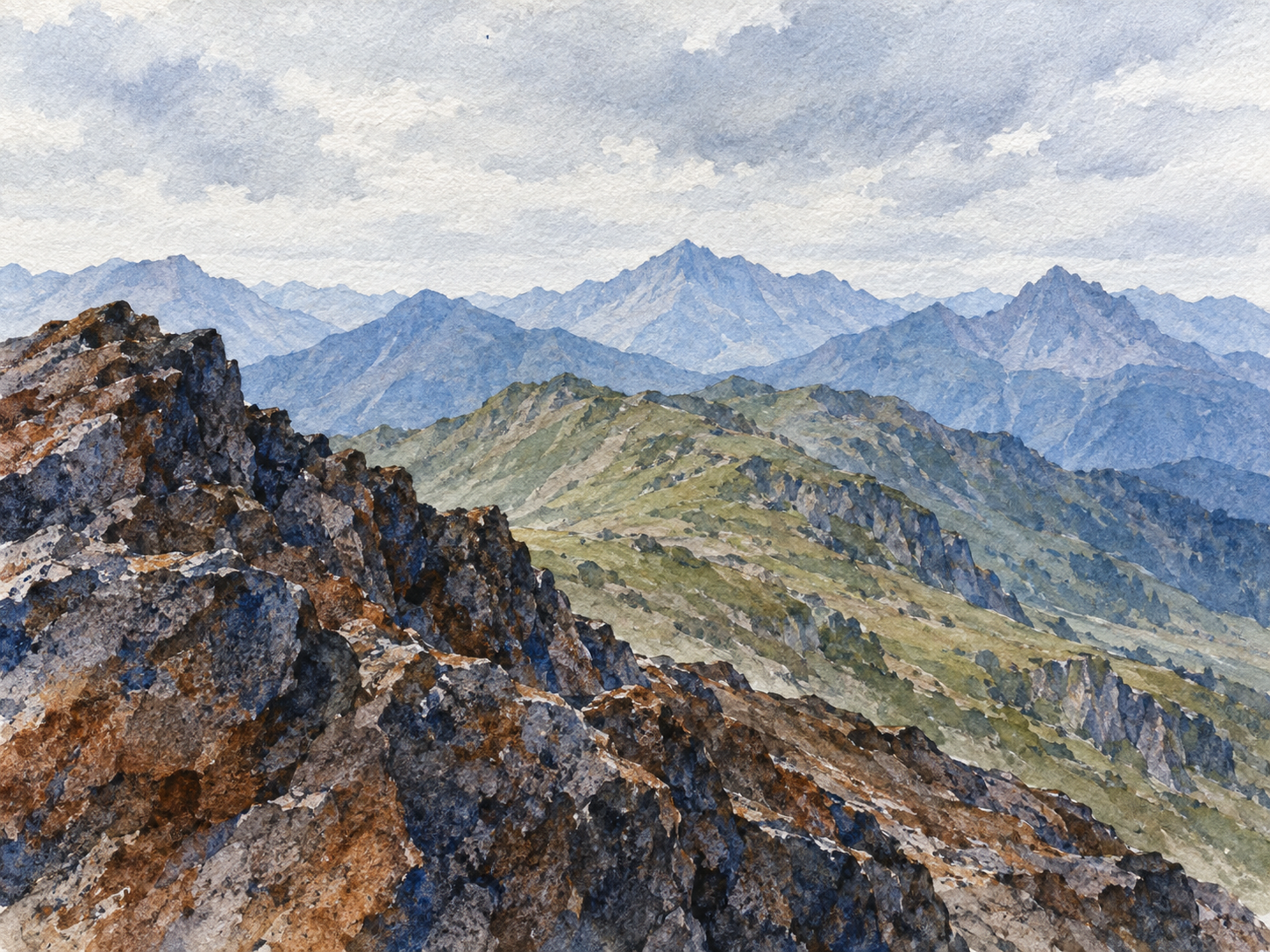
Example result illustrating this prompt's visual direction. Actual results may vary by model, reference image and settings.
 Requires Photo
  Creative Prompts
  Photo to Watercolor Illustration Prompts
 Mountain Landscape in Granulating Watercolor
Transform a mountain photograph into layered watercolor with textured rocks and atmospheric distance.
Prompt
Transform the uploaded reference photo into a hand-painted watercolor illustration. Use the supplied photograph as the authoritative source for subject structure and visible details. Work from a mountain landscape photograph. Keep the exact ridge silhouettes, horizon height, major rock formations, visible vegetation and weather character. Preserve the reference season and do not add a lake, cabin or snow. Use granulating earth and blue pigments for rock planes, letting texture settle naturally into cold-press paper. Separate foreground, middle distance and far peaks through progressively lighter, cooler washes. Reserve snow highlights only where snow exists in the reference. Follow the original landscape framing and make the main ridge the focal structure. Use a simple sky wash with cloud shapes grounded in the source. The result must read as a new watercolor painting on subtly textured cold-press paper, with translucent pigment, purposeful brushwork and varied edge softness, not a photograph with a texture overlay. Avoid oil-paint impasto, glossy 3D rendering, heavy cartoon outlines, decorative text, signatures and watermarks. Return a single finished illustration, not a before-and-after comparison, collage or framed mockup.
Recommended:
ChatGPT


Upload your photo to the AI tool first, then use this prompt.
The prompt asks the model to preserve identity and key visual features.
How to use it
- Upload a clear reference photo showing mountain landscape photograph.
- Paste the full prompt and request one finished watercolor illustration.
- Compare the result with your reference for subject accuracy and apply a relevant failure fix if needed.
Common failure fixes
- If ridges become generic, trace their reference silhouettes before applying texture.
- If distance feels flat, lighten and cool successive mountain layers while reducing detail.
- If granulation looks like digital noise, concentrate irregular pigment deposits inside rock washes.